
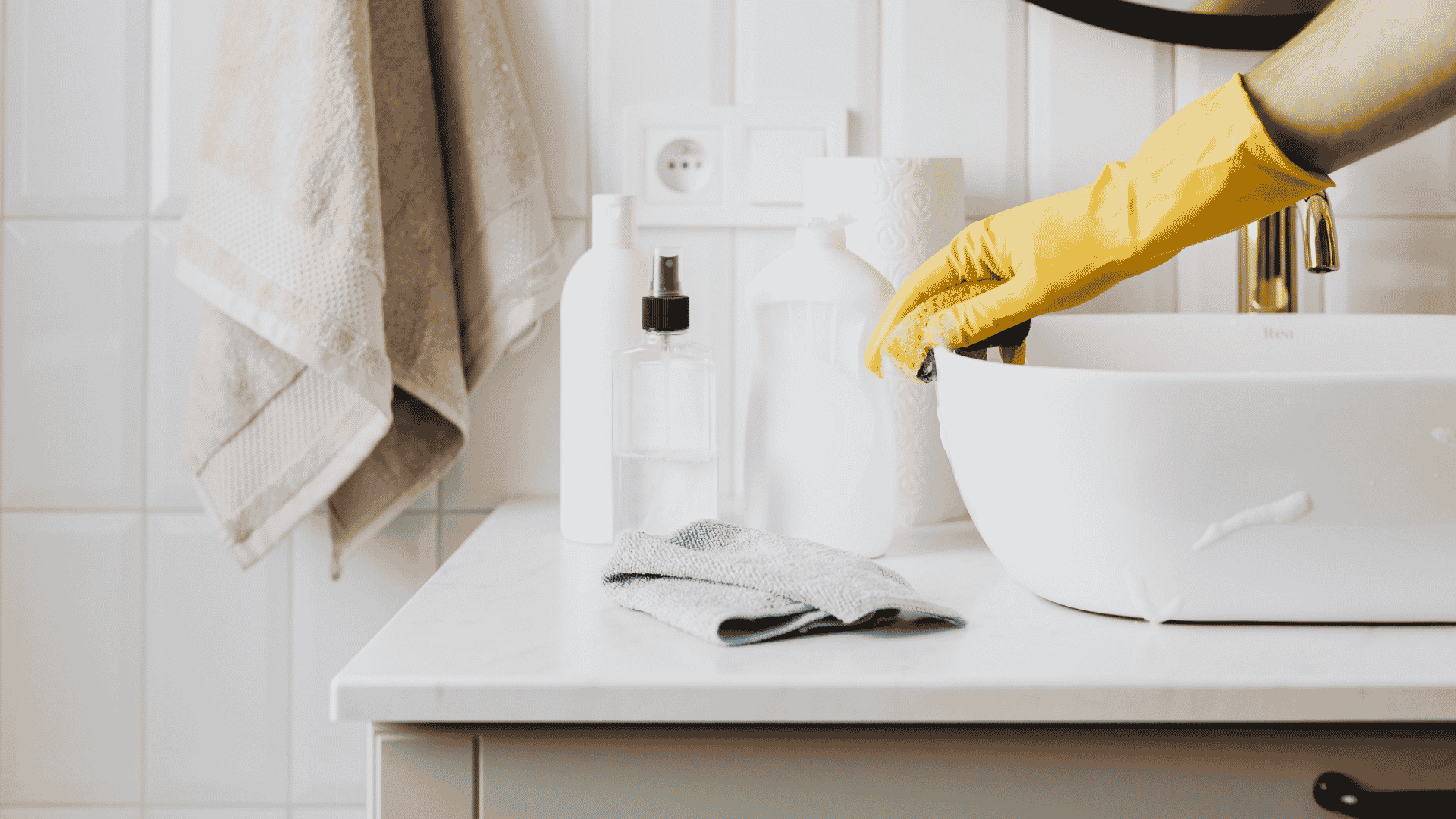
If you live in Western North Carolina and rely on well water, you already know the battle: cloudy shower doors, orange-tinged toilet rings, white crust on faucets, and grout lines that darken no matter how often you scrub. Hard water mineral deposits are one of the most common cleaning frustrations in mountain homes, and they're compounded by soap scum buildup that conventional chemical cleaners barely dent.
The good news is that a natural grout cleaner, a few inexpensive pantry staples, and the right technique can handle all three problems without bleach, harsh fumes, or expensive specialty products. This guide walks through the specific methods that work for each issue, using the same non-toxic products that Asheville Pristine Clean relies on in homes across the Asheville area every day.
Quick Summary
- Western NC well water is high in calcium, lime, and iron, creating mineral deposits that build up faster than in municipal water systems
- Baking soda paste is the go-to natural grout cleaner: apply, let it dwell 10–15 minutes, scrub with a dedicated tile brush
- Hydrogen peroxide handles stained or discolored grout that baking soda alone can't fix
- Vinegar dissolves hard water deposits on faucets, shower doors, and glass; soak fixtures for 30–60 minutes
- Bon Ami scouring powder is a biodegradable, gentle abrasive for soap scum on tubs, tile, and shower walls
- Dedicated tile brushes outperform toothbrushes and sponges for grout work; bristle size and stiffness matter
- Prevention habits like squeegeeing shower glass and improving bathroom ventilation reduce buildup between cleanings
Why Western NC Homes Have It Worse
Well Water and Mineral Deposits
Much of Western North Carolina sits on granite and gneiss bedrock that's rich in calcium, magnesium, and iron. Well water drawn from these formations carries dissolved minerals that municipal treatment systems would normally filter or soften. The result is hard water that leaves visible deposits on every surface it touches.
You'll notice it most on:
- Shower doors and glass — white, hazy film that doesn't wipe away
- Faucets and fixtures — crusty white or green buildup around handles and aerators
- Toilet bowls — rust-colored rings at the waterline
- Tile and grout — mineral staining that darkens grout lines over time
- Sinks — streaky residue around drains and basin edges
Hard Water Buildup Indoors
The frustrating thing about hard water deposits is that they're cumulative. A faint haze after one week becomes a stubborn crust after one month. Traditional cleaning products often mask the problem temporarily without dissolving the mineral layer underneath. That's why targeted, ingredient-specific approaches work better than all-purpose sprays.
Natural Grout Cleaning
Baking Soda Paste Method
Baking soda is a mild abrasive that lifts surface grime without scratching tile or damaging grout. For routine grout cleaning:
- Mix the paste: combine baking soda with just enough water to form a thick, spreadable consistency (roughly 3 parts baking soda to 1 part water)
- Apply generously along grout lines using your fingers or a small spatula
- Let it dwell for 10–15 minutes so the baking soda can break down embedded grime
- Scrub with a dedicated tile brush using firm, short strokes along the grout line
- Rinse thoroughly with clean water and wipe dry
For kitchen grout near the stove or countertops, add a few drops of biodegradable dish soap to the paste to cut any grease mixed into the grime.
Hydrogen Peroxide for Stained Grout
When baking soda alone isn't enough, particularly on grout that's yellowed, darkened, or mildew-stained, hydrogen peroxide adds natural whitening and disinfection power.
- For moderate stains: spray undiluted hydrogen peroxide directly onto grout lines, let it sit 10–15 minutes, then scrub and rinse
- For stubborn discoloration: make a paste of baking soda and hydrogen peroxide (instead of water), apply it to the grout, cover with plastic wrap to keep it moist, and let it dwell 30 minutes before scrubbing
- For mold or mildew in grout: hydrogen peroxide is a more effective long-term treatment than bleach because it penetrates porous grout rather than just surface-bleaching the stain
The Right Brush Matters
One of the most overlooked factors in grout cleaning is the brush. A worn toothbrush or soft sponge doesn't generate enough friction to remove embedded deposits. Dedicated tile brushes with stiff, narrow bristle heads are designed to fit into grout lines and deliver concentrated scrubbing power.
Key features to look for:
- Stiff nylon bristles that maintain their shape under pressure
- Narrow head sized to match standard grout line widths
- Comfortable handle that lets you apply downward force without hand fatigue
- Multiple sizes for different areas: small for corners and edges, larger for floor grout
Asheville Pristine Clean uses specialized brushes of various sizes as part of our standard equipment, and the difference in results is significant.
Removing Hard Water Stains Naturally
Vinegar Soak for Faucets and Fixtures
White vinegar is acidic enough to dissolve calcium and lime deposits without damaging chrome, stainless steel, or most fixture finishes.
For faucets and handles:
- Soak a cloth or paper towel in undiluted white vinegar
- Wrap it around the affected fixture and secure with a rubber band
- Let it sit 30–60 minutes (longer for heavy buildup)
- Remove the wrap, scrub any remaining deposits with a soft brush
- Rinse and dry
For faucet aerators: unscrew the aerator, soak it in a cup of vinegar for one hour, scrub with a small brush, and reattach. This alone can restore water flow that's been restricted by mineral buildup.
Shower Doors and Glass
Hard water film on shower glass is one of the most visible and persistent problems in mountain homes.
- Weekly maintenance: spray undiluted white vinegar on shower doors after cleaning, let it sit 5 minutes, wipe with a microfiber cloth, and squeegee dry
- Heavy buildup: apply a paste of baking soda and vinegar to the glass (it will fizz), let it sit 15–20 minutes, scrub with a non-abrasive pad, rinse, and squeegee
- Prevention: squeegee the glass after every shower; this single habit reduces hard water film by 80% or more
Toilet Bowl Rings
Rust-colored rings at the waterline are typically iron deposits from well water. Vinegar and Bon Ami together handle these effectively:
- Pour 1–2 cups of white vinegar into the bowl and let it sit 30 minutes
- Sprinkle Bon Ami scouring powder onto a toilet brush
- Scrub the ring and the bowl interior
- Let it sit another 10 minutes, then flush
For severe iron staining, repeat the process or let the vinegar soak overnight before scrubbing.
Soap Scum Removal Without Bleach
What Soap Scum Actually Is
Soap scum isn't just dried soap. It's a chemical reaction between the fatty acids in bar soap, the minerals in hard water, and body oils. That's why it bonds to surfaces rather than simply rinsing away, and why it's especially stubborn in hard water areas like Western North Carolina.
Bon Ami Scouring Method
Bon Ami is a biodegradable, natural scouring powder made from feldspar and baking soda. Unlike harsher abrasive cleaners, it cleans without scratching porcelain, ceramic tile, fiberglass, or glass.
For tubs and shower walls:
- Wet the surface
- Sprinkle Bon Ami directly onto the soap scum
- Scrub with a damp cloth or non-abrasive sponge in circular motions
- Rinse thoroughly and wipe dry
For tile and grout with soap scum: combine the Bon Ami with a baking soda paste for extra cleaning power, apply to the tile and grout together, scrub with a tile brush, and rinse.
Prevention Tips
Reducing soap scum buildup between cleanings is easier than removing it after it hardens:
- Squeegee shower walls and doors after every use
- Switch from bar soap to liquid body wash, which produces far less scum in hard water
- Run the bathroom ventilation fan during and 15 minutes after every shower to reduce moisture
- Wipe down fixtures weekly with a vinegar-dampened microfiber cloth
- Spray a light vinegar mist on shower walls after each use for daily maintenance
When to Call In Professional Help
A consistent DIY routine handles most grout, hard water, and soap scum challenges. But there are situations where the buildup has gone beyond what household tools and techniques can fully resolve:
- Grout that remains dark or stained after multiple deep cleaning attempts
- Shower glass with etched hard water damage (mineral deposits left so long they've roughened the glass surface)
- Tub and tile surfaces with layered soap scum that won't respond to scrubbing
- Whole-home hard water buildup after a period without regular cleaning
Asheville Pristine Clean's residential deep cleaning service uses commercial-grade tools, dedicated tile brushes, and the same non-toxic products described in this guide, applied with the technique and time that professional cleaning allows. Sometimes a professional reset is the best way to get back to a baseline you can maintain on your own.
As Linne Warner shared in her Google review: "They go above and beyond, and that is saying a lot from a very particular customer!"
FAQ
Does vinegar damage grout?
Vinegar is safe for most sealed grout and ceramic tile. Avoid using it on unsealed natural stone (marble, travertine, limestone) or freshly regrouted surfaces that haven't fully cured. For standard bathroom and kitchen tile with sealed grout, vinegar is one of the most effective and safest cleaning options available.
Is Bon Ami safe for all surfaces?
Bon Ami is safe for porcelain, ceramic tile, fiberglass, stainless steel, and glass. It's gentler than most commercial scouring powders because it's made from feldspar and baking soda rather than silica. Avoid using it on polished marble or other soft natural stone, where even mild abrasives can dull the finish.
How do I prevent hard water stains from coming back?
The most effective prevention habits are squeegeeing shower glass and tile after every use, wiping faucets dry after use, and doing a weekly vinegar wipe-down of fixtures and glass. For whole-home prevention, a water softening system addresses the source of the problem. For more natural cleaning approaches you can build into your routine, see our green cleaning guide.
Can professional cleaning remove old hard water buildup?
Yes. Professional-grade tools and dedicated tile brushes can remove mineral deposits and soap scum buildup that household cleaning hasn't fully addressed. Contact Asheville Pristine Clean for a free estimate if you'd like a professional deep clean to reset your surfaces.
Start Fresh, Stay Fresh
Hard water, grout grime, and soap scum are facts of life in Western North Carolina, but they don't have to define your bathroom. The methods in this guide work because they target the chemistry of each problem with the right ingredient: vinegar for mineral deposits, baking soda and hydrogen peroxide for grout, and Bon Ami for soap scum.
If you'd rather hand the job to a team that does this every day, reach out to Asheville Pristine Clean for a free estimate. We've been helping Asheville homeowners keep their spaces clean and chemical-free since 2012.